

Teboho Setena
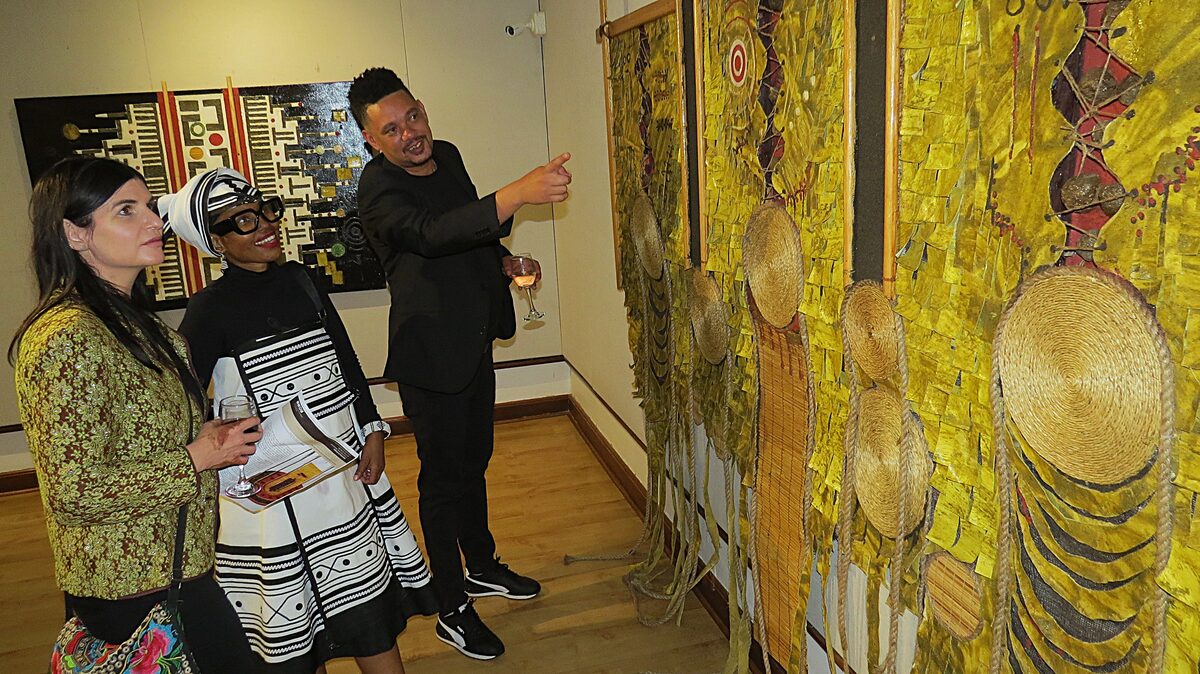
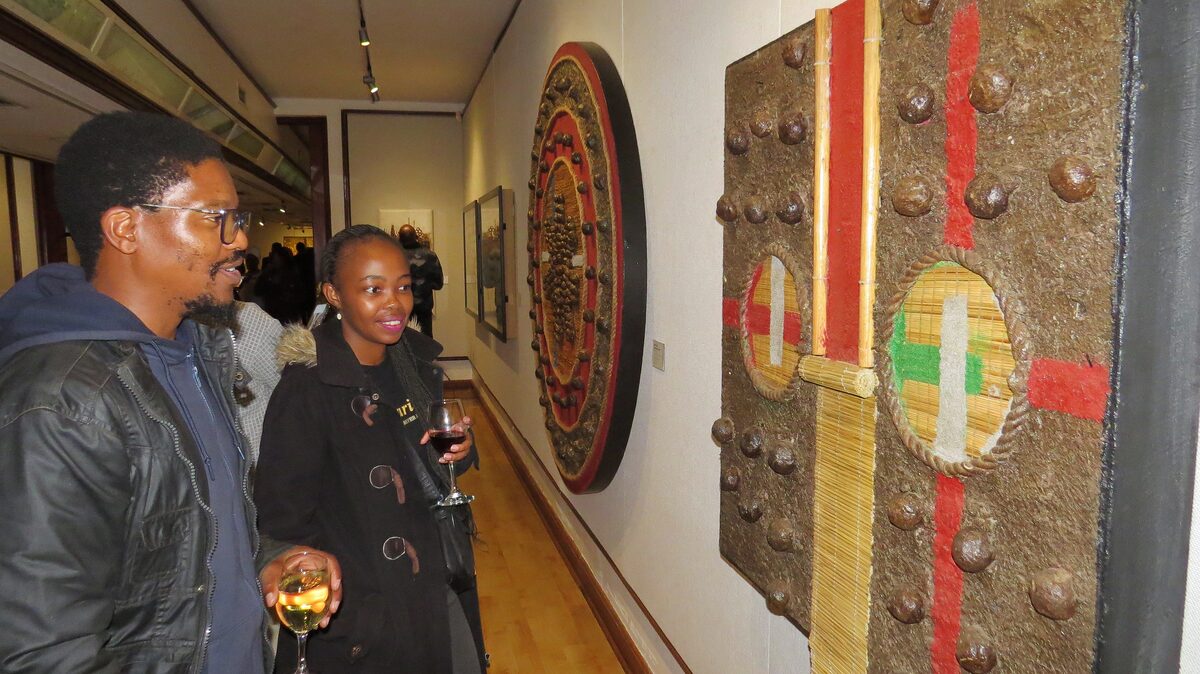
An exhibition featuring beautifully crafted artworks from highly prized cow dung (manure) is open for viewing, and for the public to glean life lessons from at the Oliewenhuis Art Museum in Bloemfontein.
Running until 16 June, it officially opened on Thursday, 8 May.
Tilted Qula Kwedini, this solo exhibition is a deeply personal and culturally resonant by the talented South African artist, Mzie Gojo.
He brings to light his rich and proud Xhosa roots and traditions, reflecting his heritage of a rural Eastern Cape upbringing.
In his craft, Gojo exhibits the symbolic power of the sacred song “Qula Kwedini,” to explore themes of identity, healing and collective memory.
“Qula Kwedini”, references a revered Xhosa sacred song, traditionally sung to herald important communal events, such as the return of a young man from initiation school.
With his distinctive visual language and use of culturally significant materials like cow dung, Gojo creates a powerful sensory experience that bridges ancestral knowledge and contemporary social commentary.
Gojo explores the power of cow dung.
A dried cow dung cake is used as a source of energy for cooking food, decreasing the dependency on other sources of energy and is entirely environmentally friendly.
In Xhosa tradition, cow dung is used in kraal spaces where men gather for discussions and ancestral rituals. It symbolises wealth, stability, and spiritual grounding.
For Gojo, the use of cow dung goes beyond cultural reasons. It also exhibits the experience of inner satisfaction and the inner discomfort of real social issues that used to connect people with “umthonyama” (old cow dung that stayed overtime in the kraal).
Gojo’s deliberate use of this material evokes both nostalgia and discomfort, prompting reflection on contemporary social disconnection.
Gojo creatively juxtaposes the symbolism of Qula Kwedini with “iKhambi,” a Zulu term for indigenous herbal remedies.
He draws parallels between these healing practices and his art making process, which seeks somatic and spiritual restoration through indigenous knowledge systems.
With his meticulous and distinctive stylistic approach in encoding and decoding the inspired messages onto canvas, he does not “mince his words” in capturing the details of form – warts and all.
Deeply rooted in Xhosa oral tradition, this song symbolises celebration, unity, and the transition into manhood.
It is also performed during stick-fighting gatherings, where young men demonstrate skill, strength, and solidarity.
These rituals evoke profound memories for Gojo, as they were part of his formative years.
Gojo completed matric at the Ngcongolo Senior Secondary School in 1995.
Shortly thereafter, he was employed at a furniture manufacturing factory, where he worked for seven years, primarily as a data capturer.
He later pursued his passion for art at the Funda Centre and Qula Kwedini marks Gojo’s second solo exhibition. Gojo is one of the top artists selected last year for solo exhibitions at the Oliewenhuis.
South African visual artists were invited through an open call to submit their solo exhibition proposal for placement on the exhibition calendar of the Oliewenhuis Art Museum. It is reported that more than 50 applications were received.