

With the winter season upon us, healthcare professionals in the Free State are gearing up to deal with an increase in burn injuries.
According to Dr Hilge du Preez, a paediatric surgeon at the University of the Free State (UFS), they observe an increase in these injuries – which can be devastating after causing serious bodily harm, long-term disability, and even death – during the winter months.
She said many of these injuries were preventable, and doctors and medical staff believed educating communities about common preventive practices could help keep them safe.
“As healthcare professionals, we do all we can to help burn patients recover and regain their health and activity. However, as with many other conditions, the best treatment is prevention. Thermal burns are the most common type of burn we see. These are caused by contact with hot substances or fluids, such as flames or boiling water,” said Du Preez.
“Children and adults sustain burn injuries in different ways. While children can suffer burns from flames, they are more likely to burn themselves by spilling hot liquids or food. We also see cases where children accidentally fall into a tub of hot water that is being prepared for a bath.”
According to Du Preez, when cooking on a stove, it is safer to have pot and pan handles turned inward, rather than outward where children can reach them. Kettle cords and tablecloths should be tucked in and kept out of reach to prevent children from pulling at these and spilling hot substances.
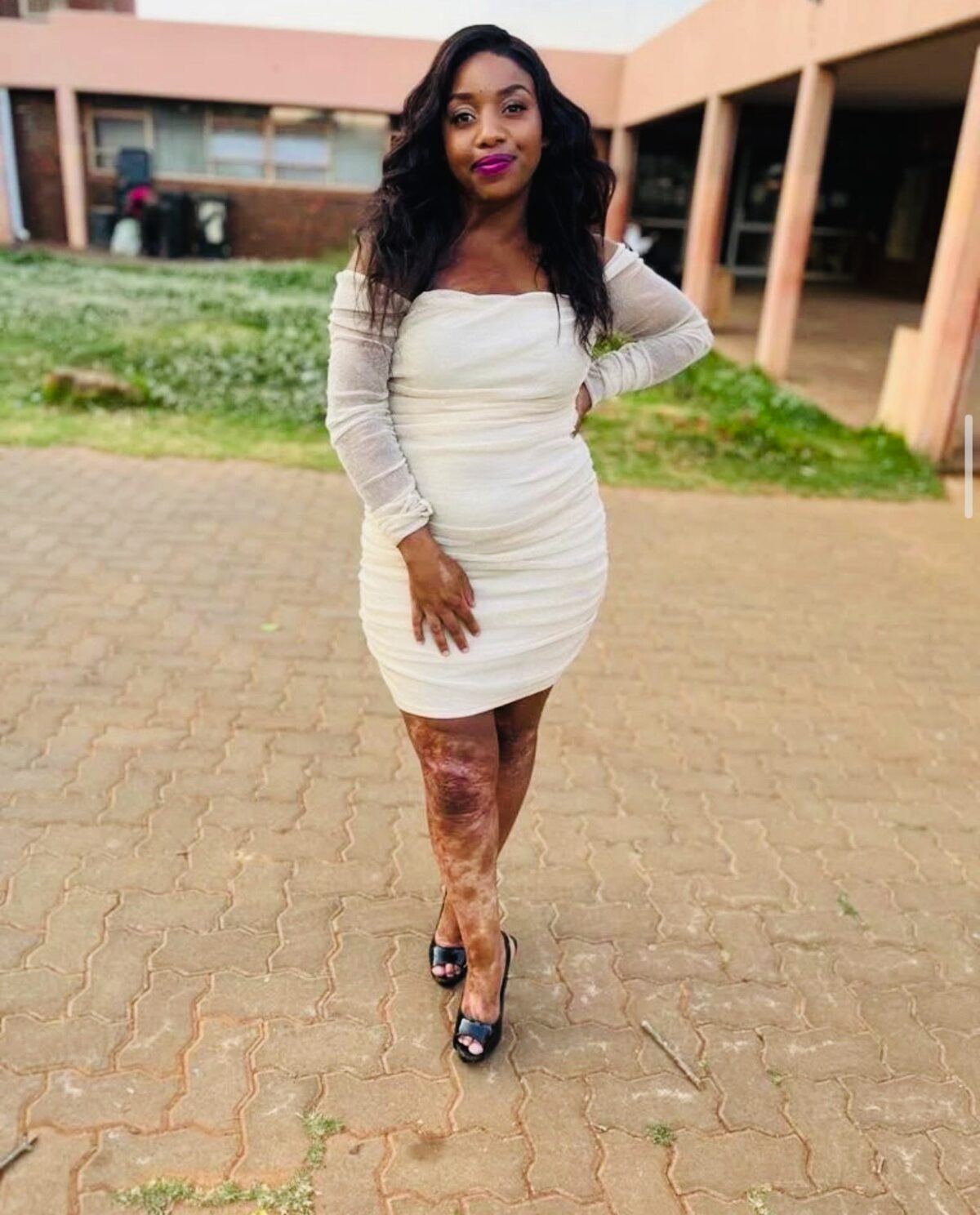
A case study can be made of Nosicelo Madushana, a third-year medical student at the UFS. According to Du Preez, Madushana was four years old when she sustained third degree burn wounds on 70% of her body. A large pot of boiling water fell on her. However, she would only later understand the impact of this accident on her life.
“It was not until I was in Gr.3 that I began to understand that I was perceived as different. During an Eskom educational session on the dangers of electricity, the presenter used the analogy of turning into a ‘chicken roast’ when tampering with electric circuits. In that moment, a number of my peers turned, pointed, and laughed, likening me to the example given,” Madushana recalls.
“That experience marked a turning point in my self-awareness and emotional resilience. I became emotionally guarded – not violent, but verbally defensive. I often felt I had to exist in survival mode rather than being allowed to simply be myself.”
As a result of these experiences, she explained, she had developed a deep-seated need to constantly prove that she belonged in every space she entered. She wanted to ensure that any opportunity or recognition she received was based solely on merit and not influenced by perceptions of her physical appearance or sympathy for her circumstances.
It became an unhealthy cycle of overcompensation and striving to validate her presence.
However, Madushana insists her life is not defined by the incident, but by the choices she makes and the legacy she intends to leave. Her passion lies in her fight against cancer.
“I am a three-time graduate, and I will not stop until I attain the prestigious Fellowship of the College of Pathologists of South Africa, or FCPath(SA), qualification – a recognised postgraduate qualification in pathology for medical practitioners in South Africa. My journey is one of strength, not sorrow. I am committed to being a part of the global effort to eliminate this disease.”
Du Preez has strongly recommend that children should never be left unsupervised around hot substances, be it food or fire. When running a bath for a child, add cold water to the tub first, then hot water to reach the desired temperature.
“Paraffin stoves are responsible for a significant number of house fires in South Africa, and healthcare professionals strongly advise against their use,” said Du Preez.
“If someone suffers a burn injury, correct first aid treatment should be applied immediately. Remove any clothing and jewellery from the affected area, and ensure any burning debris is removed. Cool the burn by running it under lukewarm tap water for ten to 15 minutes. Cover the wound with a clean, damp cloth and seek medical attention.
“In the event of a fire, remember to ‘stop, drop, and roll’ to extinguish any flames, and seek urgent medical care,” said Du Preez.

