

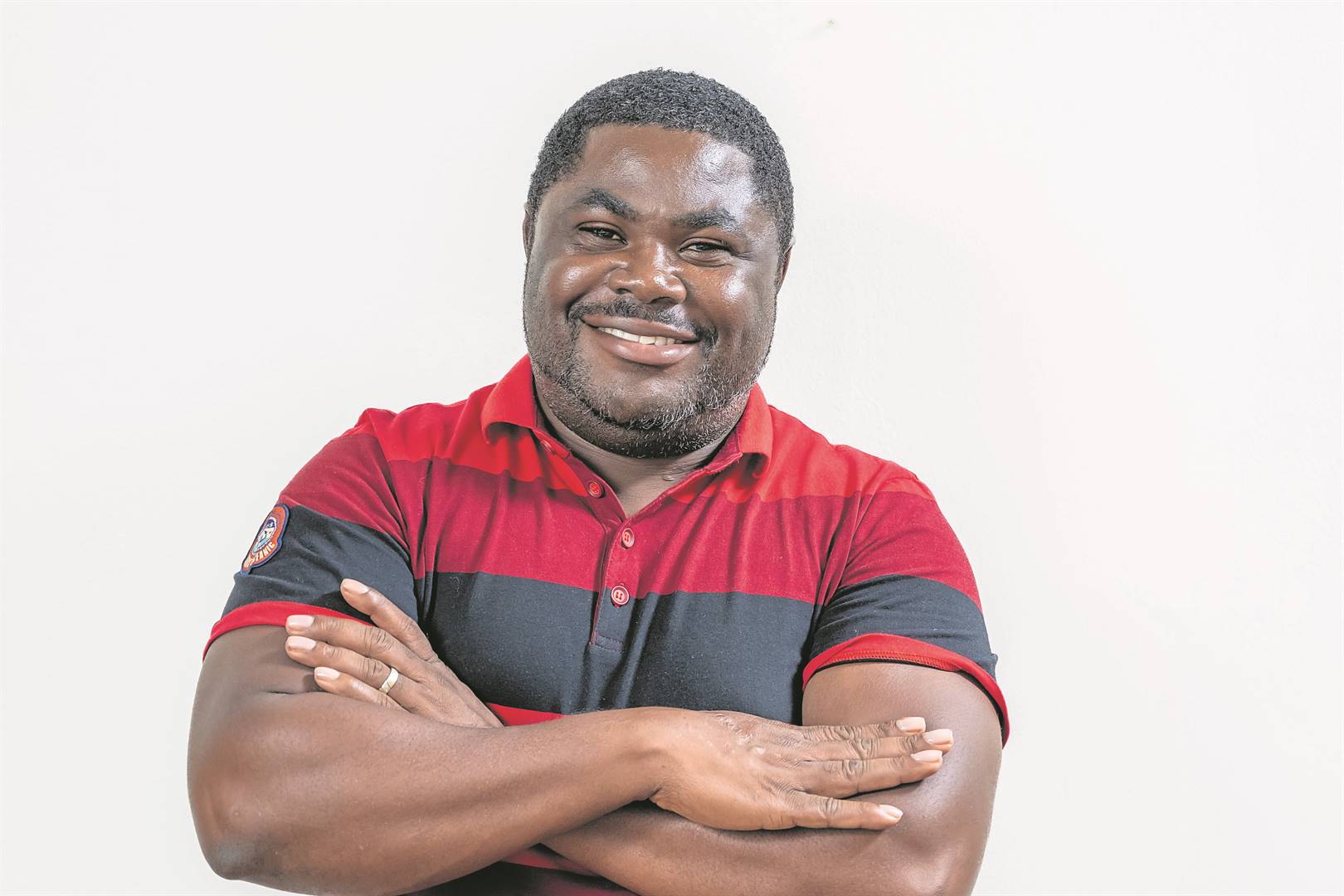
Prof. Abdon Atangana, a Mathematic whizz of the University of the Free State (UFS), has added another coveted accolade to his collection earned in the Science, Technology, Engineering and Mathematics (Stem) discipline. He holds the position of professor of Applied Mathematics in the Institute for Groundwater Studies (IGS) in Bloemfontein.
The United Nations Educational, Scientific and Cultural Organization (Unesco) awarded Atangana the first Al Fozan International Prize for the Promotion of Young Scientists in Stem.
The recognition more specifically arose from his immense contribution to Mathematics and applications, fractional differential and integral calculus with non-singular and non-local kernel, fractal-fractional differential and integral calculus.
Atangana (37) was one of five young scientists presented the accolade at a ceremony held at the Unesco headquarters in Paris, France, on 19 June. Each received a medal and $50 000 in prize money.
Every two years Unesco presents awards to five candidates from African-Arab, Asia-Pacific, European, North American, Latin American and Caribbean states every two years.
Born in a small village in rural Cameroon, Atangana is delighted to receive recognition for his contribution to strengthening Stem and promoting it in several countries on the African continent.
“I feel proud because 2 500 candidates were selected worldwide, 200 shortlisted, and five were selected at the end,” said Atangana.
“I represented my continent of Africa, while the other four laureates were selected in engineering and science.”
Atangana is the chairperson of the African Mathematical Union Commission for Research and Innovations in Mathematical Sciences (AMU-Crims).
Atangana has committed to remain in Africa, and considers the continent as a temple of Mathematics that was once visited by great mathematicians including Euclid and Pythagoras.
“Today, many young, talented Africans are moving primarily to the West in search of greener pastures. The question I pose is: What happened?
“Briefly, the strategies utilised during the colonisation era made Africans lose self-belief and self-esteem, and become a dominated nation.
“I thank God that I, today, as a child born and raised in Africa, went to France for the first time.
“Not in search of greener pastures, but because the work I did in Africa, with no external support, attracted the global attention of researchers from all fields of science, technology and engineering.
“This is a clear indication that Africans can stay in Africa, work hard, evolve, and develop their continent without additional support or compensation.
“I will stay in Africa, work extremely hard to pave the way forward, and lay a concrete foundation for the next generation through God’s grace,” said Atangana.