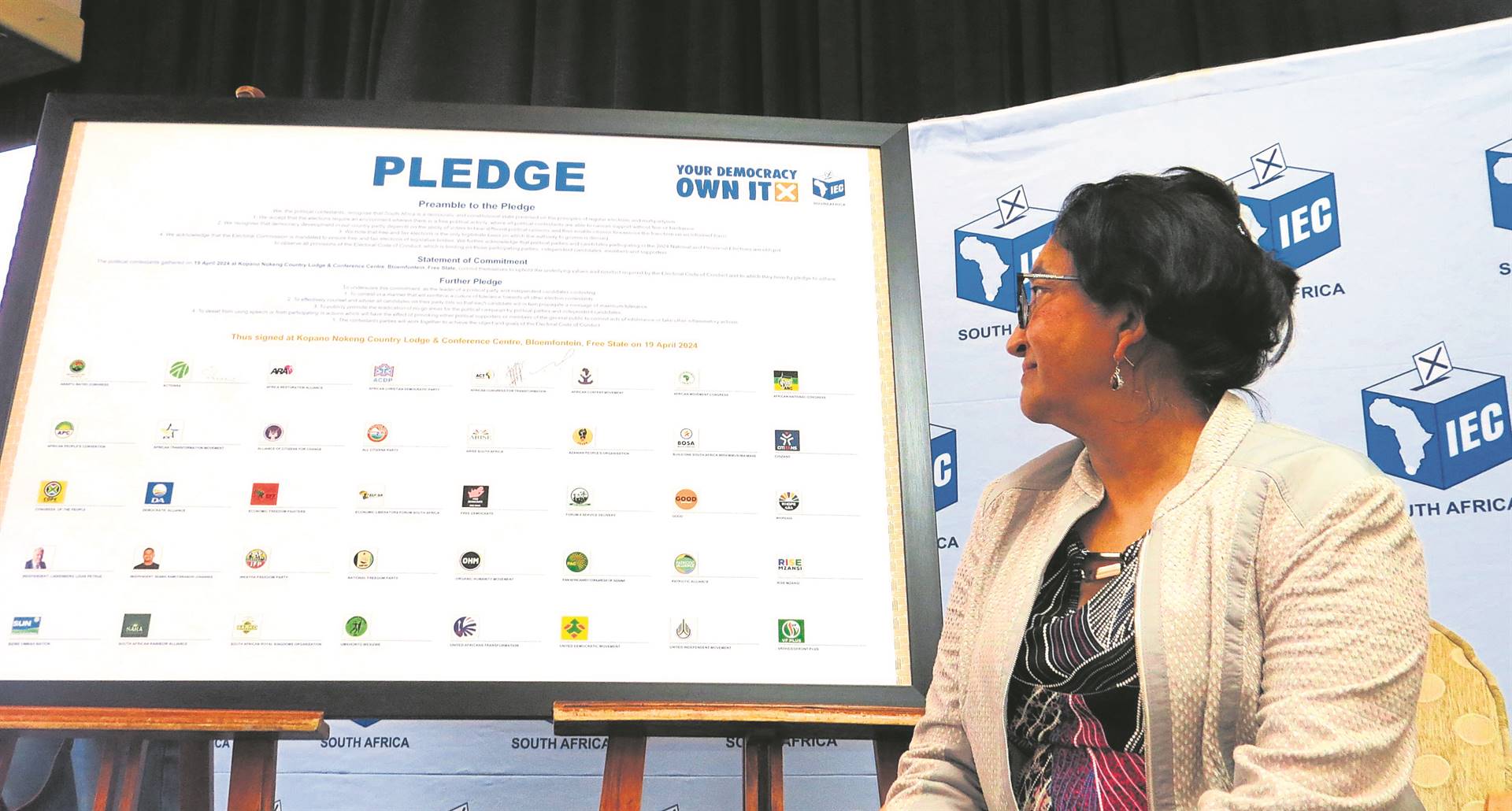

The Electoral Commission of South Africa (IEC) announced that it would publish the final list of candidates contesting the upcoming general elections on Wednesday, 10 April, after completing a strict scrutiny process that includes objections.
The body managing elections in South Africa, ensuring free and fair elections at all levels of government, had set 2 April as the deadline for the objector, be it a registered party or nominated candidate, to appeal against the decision of the commission to the Electoral Court.
Furthermore, political parties intending to contest in the elections had until 25 March at 17:00 to revise their lists and inform the IEC if they had nominated candidates who also appeared on the list of another party or who had been nominated as independent candidates.
Kate Bapela, the IEC’s national spokesperson, said there had been 42 candidates appearing on more than one party list, implicating 39 parties.
“Furthermore, one candidate was nominated as an independent and also appeared on a list of a party,” she said.
Bapela said after the IEC’s vetting process, 14 662 candidates had been nominated to contest the 887 seats available in the National Assembly and the nine legislatures.
The spread of the candidates is as follows:
- 4 323 candidates have been nominated to contest the compensatory seats in the National Assembly (contested by parties only);
- 3 596 candidates have been nominated to contest the regional seats in the National Assembly (contested by party candidates and independents); and
- 6 743 candidates have been nominated to contest seats in the provincial legislatures (contested by party candidates and independents).
Bapela said seven independent candidates would contest the regional elections, while six would contest the provincial legislature elections. The region with the most number of independent candidates is the Limpopo region, with three.
According to Bapela, the ballot paper for the compensatory seats in the National Assembly was the biggest, containing 56 contestants. She said the biggest regional election ballot would be in the Gauteng region, with 40 political parties and two independent candidates.
In addition, she said Gauteng would have the biggest ballot in respect of provincial legislature elections, with 42 political parties and two independent candidates.
Political parties and independent candidates were given 8 March as the deadline to submit their nomination details to participate in the national and provincial elections. The commission had opened the list of candidates for inspection on Tuesday, 26 March, and Wednesday.
The process paves the way for the general elections to be held on 29 May.
South Africa has since 1994 transitioned from the system of apartheid to majority rule of democracy, when scores of people of all races voted on 27 April.
Transition saw the ANC coming to power, with defunct National Party (NP), the official opposition. The NP was the governing party of South Africa from 1948 until 1994, and it disbanded in 2005.
The ANC has managed to retain power after subsequent elections in 1999, 2004, 2009, 2014 and 2019.