
Throughout its history, the Central University of Technology, Free State (CUT), has achieved remarkable milestones and made significant contributions to society. Here are some highlights:
In 2014, the university’s Engineering students participated in, and won the Sasol Baja SAE competition for their outstanding conceptualisation of a real-world engineering project. This equipped them with the required skills to thrive in this industry.
In 2015, the university launched the unit for Sustainable Water and the Environment to respond to the country’s water crisis. It partnered with local and international stakeholders to develop innovative ways to tackle water scarcity.
In 2016, scientists of the CUT discovered a new drug to help fight aquatic animal infections caused by parasites. The results of this study have been accepted for publication in the prestigious international scientific journal, “Scientific Reports”.
In the same year, the university collaborated with Thaba-Nchu traditional healers to integrate knowledge of indigenous medicine, food, and essential oils into their practice. This partnership was central to the CUT’s broader objectives of conceiving and developing social and scientific solutions for the region.
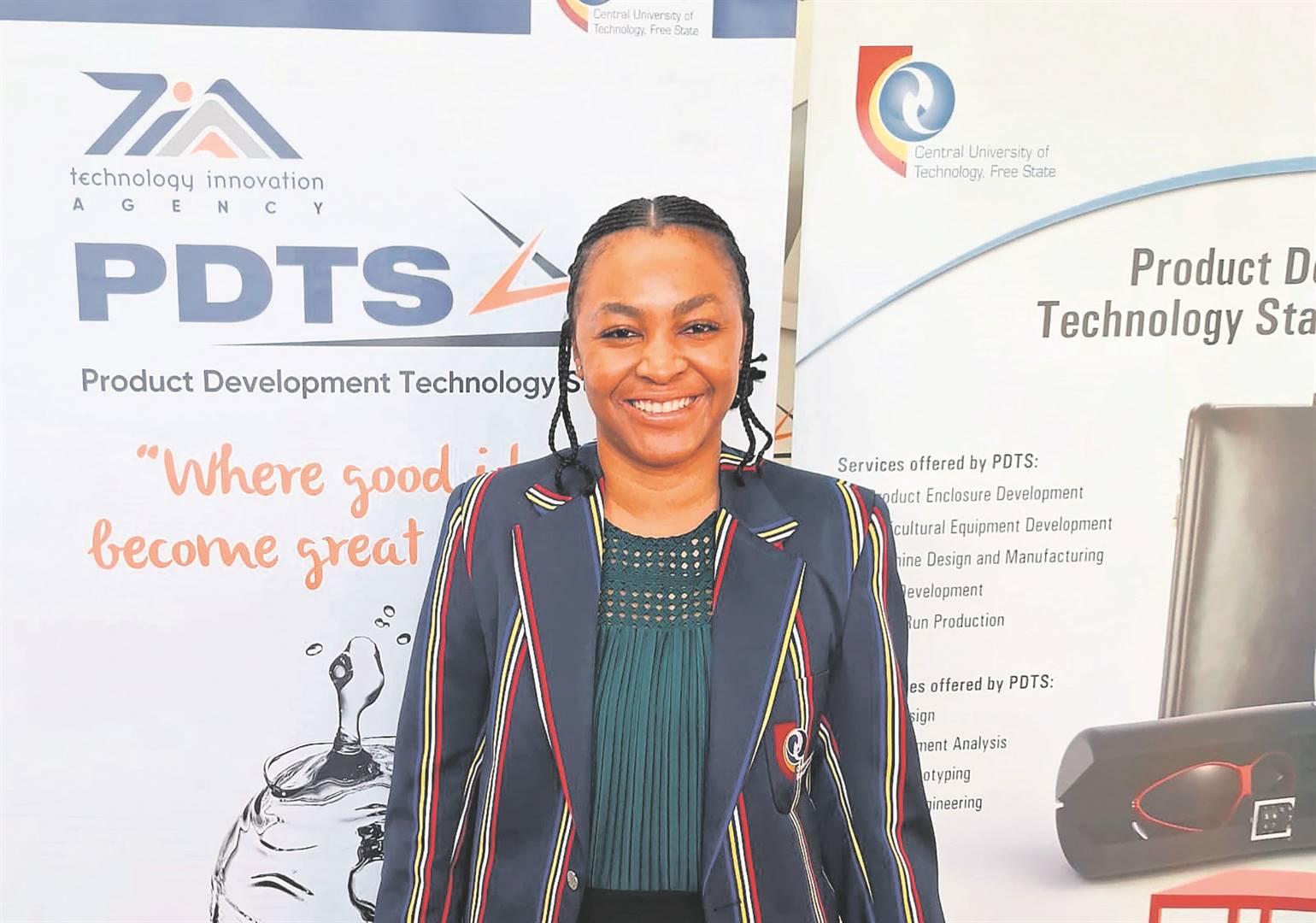
In 2018, the CUT’s Product Development Technology Station (PDTS) showcased and launched its first commercialised electronic product invention: the Precision Diesel system. This product was developed to automate a logbook used by farmers to simplify tax-related records. In the same year, students also showcased their unique engineering abilities when they built a solar car which competed with their international counterparts in the Sasol Solar Car Challenge for the first time.
During the COVID-19 pandemic, the university developed 3D-printed masks for non-invasive ventilation for patients. It also assisted in manufacturing much-needed hospital equipment, such as oxygen connectors and splitters to increase hospital capacity. The university became the first institution in Africa to receive the ISO 13485 certification for designing and manufacturing medical devices.
The university also installed 12 photovoltaic (PV) solar arrays to generate electricity for its campus. With a well-established 153.7 kWp PV plant at the Bloemfontein campus, this solar plant stands as a significant milestone for the South African university landscape, reflecting its commitment to becoming a leader in renewable energy solutions. The project formed part of a cost-saving measure, also envisioned to reduce the CUT’s carbon footprint, and play a pivotal role in South Africa’s green energy sector. This initiative not only reduces the university’s carbon footprint but also provide students with valuable hands-on experience in sustainable energy technologies, exploring the benefits that solar powers can offer.
In response to the ongoing water scarcity crisis, the university’s Sustainable Water and Environment unit collaborated with local and international partners to address environmental challenges and develop sustainable water management solutions.
The CUT has successfully launched an artificial intelligence (AI) hub in partnership with the Department of Communications and Digital Technology (DTCT) and the Free State government. The primary objective of the hub is to use AI for transformative changes, focusing on enhancing agricultural practices in the central region of South Africa.
The CUT AI Hub aligns with its comprehensive digital transformation strategy and road map with an ambitious vision to become a leading centre for AI research, development, and application by 2030, significantly advancing smart agriculture value chain, smart manufacturing, natural language processing, and smart and sustainable tourism.
Furthermore, the university is amongst the forefront runners in AI and Smart Campuses as part of securing the future of tertiary education. The university has aligned with global partners to deliver a multistakeholder collaboration and digital skills development in that sphere.
In 2022, the university partnered with the global leaders in technology and innovation, Samsung Electronics South Africa, and launched the Samsung Innovation Campus (SIC) initiative to upskill graduates with critical life changing fourth industrial revolution (4IR) skills that will change their lives and ultimately contribute to the country’s economy. The partnership saw the first cohort of 20 students graduate through the programme, the first to be rolled out in Africa.
The CUT is also housing several research chairs, including a South African Research Chairs Initiative (SARChI) chair in additive manufacturing since 2015 and a Wholesale and Retail Sector Education and Training Authority (W&RSETA) Research Leadership Chair to offer new opportunities for shaping skills in food safety culture and sustainability. The university has 24 National Research Foundation-rated researchers among its 224 academic staff.
To the CUT, and its 20 years of thinking beyond.