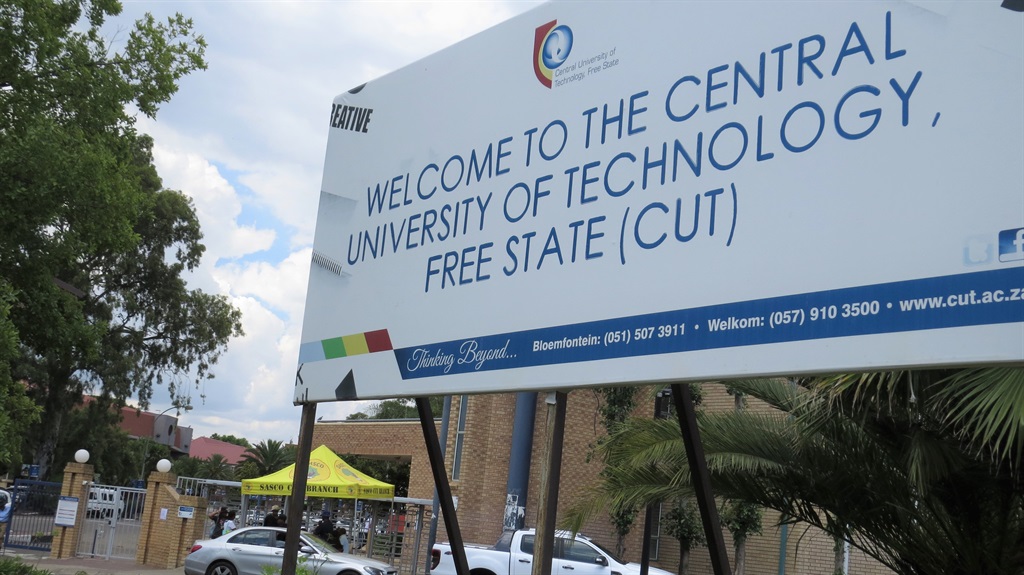

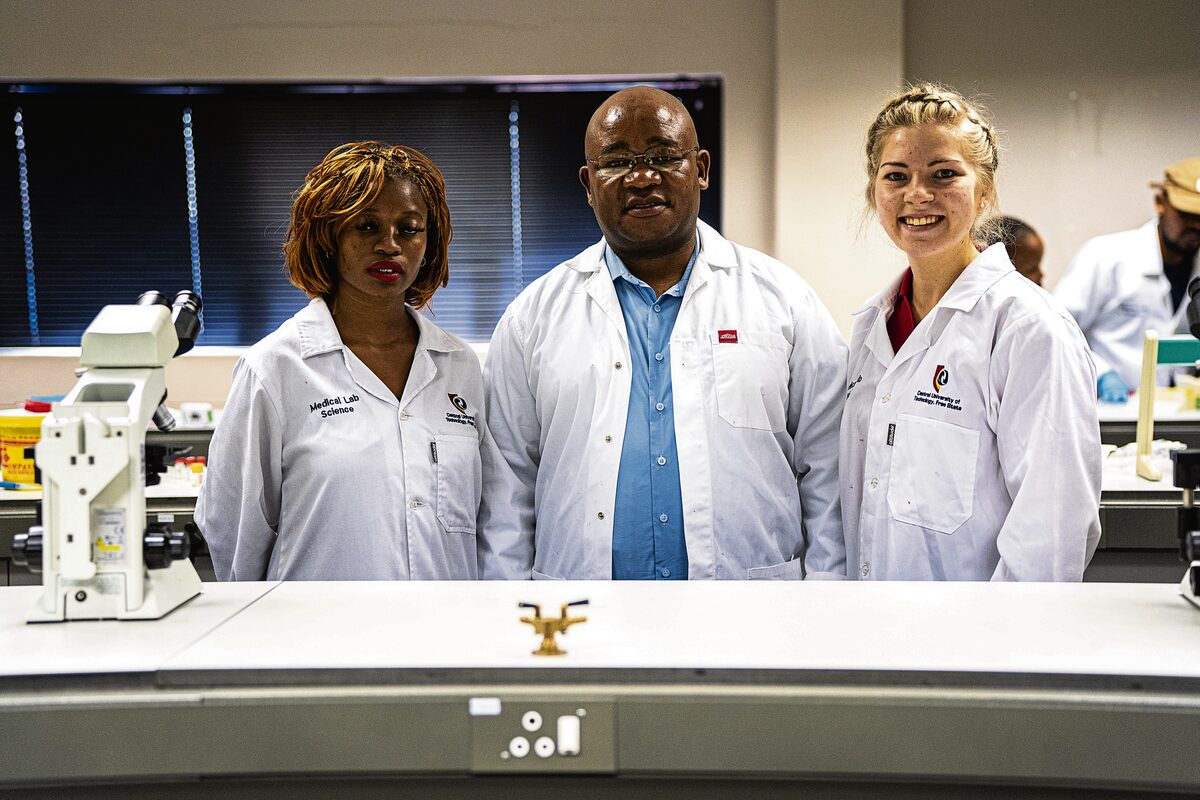
Two Medical Microbiology students of the Central University of Technology (CUT), Free State, achieved a significant milestone and recognition when they presented their paper on artificial intelligence (AI).
Chanelle Mcleod (second year) and Nthabiseng Tshandu (third year) were invited to present at a prestigious global event attended by about 803 scientists, hosted by the University of Kent in England.
Their presentation, titled “AI Through the Student Lens: A Question and Answer AI Engagement with Central University of Technology Students,” was delivered alongside renowned academics and students from various international institutions.
The students integrated AI tools such as ChatGPT 3.5 and Meta AI (WhatsApp) in their investigation to identify pathogenic organisms. They populated large language models (LLMs) with patient microscopy, culture, and sensitivity (MCS) data, supplemented with biochemical test results, and critically evaluated AI-generated feedback.
Under the mentorship of Prof. Parks Makhoahle, Medical Microbiology lecturer, the students engaged in a diagnostic practical integrating AI tools to analyse pathogenic organisms. Using MCS data, supplemented with biochemical test results, they critically evaluated AI-generated diagnoses.
Their assignment was focused on identifying bacterial pathogens exhibiting beta-hemolytic and weak alpha characteristics on blood agar, with specific gram morphological structures observed as long chains and short chains, respectively, for different academic levels.
“Our students showcased the integration of AI into Medical Microbiology diagnosis, emphasising its benefits while cautioning the attendees about the importance of information verification and human oversight in their final clinical decisions,” Makhoahle added.
“Their contribution highlighted the CUT’s commitment to innovation in medical education and the critical role of AI in diagnostic sciences.”
Their synopses were accepted for presentation alongside other subject experts and students.
When elaborating on her synopsis, Tshandu said her experience with AI has been beneficial in her academics as there were concepts that she could not grasp from physical learning and teaching, that she could now master because of the App.
“Incorporating AI in learning and teaching has the potential to enhance student engagement, give clearer understanding, and provide better outcomes as much as it has its own challenges,” she highlighted.
She added that using the App for her assignment opened ample learning opportunities as it provided her with more information by suggesting for further testing in molecular or biochemical test to confirm the identity of the organism.
McLeod said that AI plays a critical role in enhancing learning and interpretation. It is a transformative tool that enhances academic performance, fosters curiosity, and empowers students to approach scientific inquiry with confidence.