

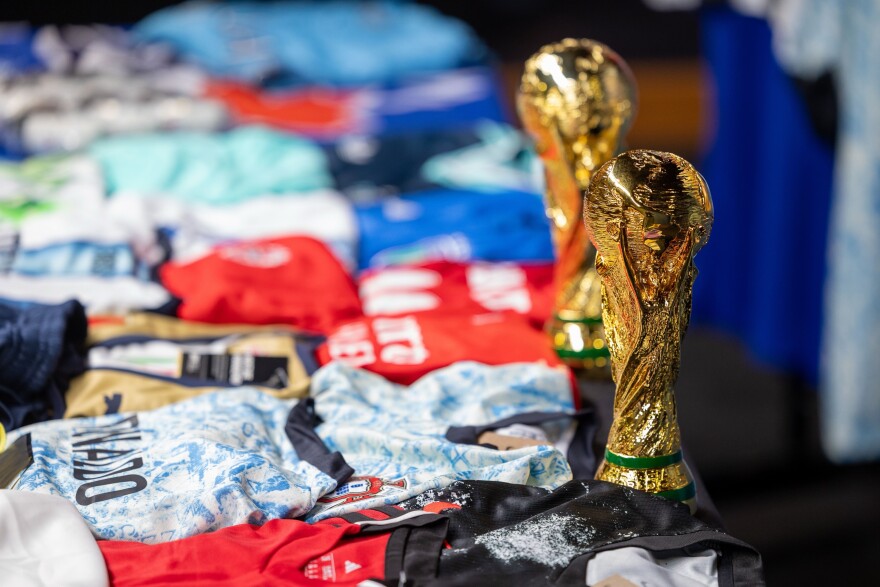
MEXICO CITY – Dozens of packages stuffed with counterfeit football jerseys sit in a Mexico City warehouse, each marked with a “seized merchandise” sticker – the latest haul in authorities’ battle against pirated products ahead of the 2026 World Cup.
Mexican authorities have seized $1.3 million (about R22 million) worth of counterfeit stock in the capital over the past three months, ahead of the global football tournament that begins on 11 June and is co-hosted with the United States and Canada.
Despite the crackdown, sales of knockoff merchandise continue to surge, as soaring ticket prices and official product costs fuel demand for cheaper alternatives.
In downtown Mexico City, street vendors hawk pirated goods on pavements, with team shirts for Mexico, Argentina and Colombia selling for $10–$20, roughly one-tenth the price of an official Mexico national team shirt.
“The World Cup is almost here, and I would really like to have my shirt for when Mexico wins,” engineer Jorge Ruiz (27) told AFP after buying two knockoff Mexico shirts for about $40, one white and another green.
Ruiz avoided the official store, where a jersey made of special anti-perspiration fabric costs nearly $200.
He said the official jersey might be worth the money for “someone who is a big fan,” but it’s too expensive for him.
“I just want it for the World Cup, to have a good time,” he explained.
Protected trademarks face widespread violation
FIFA’s trademarks, names and symbols are protected by penalties for unauthorised sale of World Cup merchandise. Businesses cannot use FIFA branding or suggest association with the tournament without authorisation.
Over the last three months, the Mexican government’s anti-piracy agency has seized more than 105 000 items worth $1.3 million in three operations, sweeping Mexico City’s historic centre, where the “Fan fest” for the tournament will be hosted.
In the warehouse of the Mexican Institute of Industrial Property (IMPI), coordinator Jose Eduardo Saavedra walks past bags overflowing with unfolded clothes.
Red marker letters on tape on one bag say “50 Adidas,” referring to the brand that produces Mexico’s official shirt.
“What the presumed offenders will need to prove is that they are authorised to use these logos, these brands or in their case (to show) that the products are original,” Saavedra said.
Illicit trade persists despite enforcement
Authorities are also conducting anti-piracy operations in the other two Mexican cities hosting the World Cup, Guadalajara and Monterrey.
But the illicit trade continues. Some hawk the national shirt as if they were selling drugs, whispering to potential buyers, keeping the shirt hidden until payment is made.
Others simply take the money and never deliver the product.
One street vendor, who requested anonymity, lost all her pirated merchandise in a recent police crackdown. But the authorities never returned, so the vendor resumed the black market business. She offers low-quality shirts for around $14, and copies closer to the originals for almost $40.
As the 11 June opener approaches, business is booming.
“The quality is really similar, it’s not the same obviously, but it is very similar,” barista Emanuel Diaz (25) told AFP.
ALSO READ: Police seize R8 million worth of fake goods in Bellville raid


